


You have a campaign coming up. Or an onboarding kit to put together. Or an event where every attendee walks away with something branded. And somewhere in the brief, there is a note that says: make it sustainable.
But here is the problem. Walk into any promotional products catalogue today and nearly everything has a green label on it. Recycled. Biodegradable. Eco-friendly. The words are everywhere, and most of them mean very little.
This guide is for marketing and HR managers who want their branded merchandise to reflect the values their company stands for.
The First Question to Ask: Will People Use It?
Before anything else, before materials, before certifications, before price, ask this: will the recipient use this every day?
This matters more than any eco label. A bamboo coffee cup used every morning for two years has a far smaller environmental footprint than a "biodegradable" pen that sits in a drawer for three months and gets thrown away.
The most sustainable product is the one that never ends up in a bin.
For your brand, this also means more. Daily use equals daily impressions. The right product does two jobs at once: it reduces waste and keeps your brand visible long after the campaign ends.
Ask yourself before approving any product:
- Does this solve a real problem for the recipient?
- Would I personally use this regularly?
- Is it something people keep, or something people discard?
If you cannot say yes to at least two of those, reconsider the product.
Materials: What the Label is Not Telling You
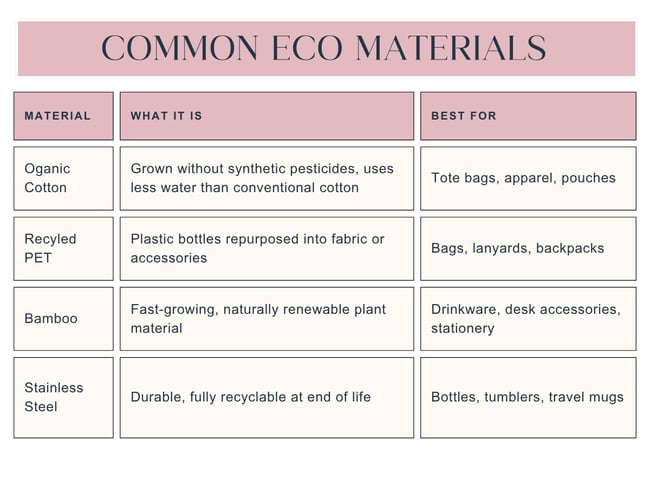
Not all "eco" materials are equal. Here is a plain-language breakdown of the most common ones, and what they are good for.
The word to watch for is certified. Any supplier can print "made from natural materials" on a product page. What matters is whether an independent organisation has verified that claim.
Durability is a Sustainability Superpower
Here is a truth the industry rarely talks about: a cheap product is never really cheap.
When a tote bag tears after two uses, or a bottle leaks and gets tossed, it has done harm to the environment and to your brand. That product cost money, used resources to manufacture and ship, and ended up in a bin anyway.

A well-made stainless steel bottle carried for five years replaces hundreds of single-use plastic bottles. A durable rPET tote used as a weekly shopping bag for three years does more for sustainability than ten "eco" products that fall apart.
When reviewing a product, look for:
- Minimum lifespan of two to three years under regular use
- Quality stitching, hinges, lids, and seams, not just good-looking renders
- A supplier willing to provide samples before a bulk order
If a supplier cannot tell you how long a product is built to last, that is a gap worth pushing on.
The Supply Chain Matters as Much as the Product
A product can be made from recycled materials and still cause real harm, if it was manufactured in a facility with poor labor conditions, shipped with no carbon offsetting, or packaged in layers of single-use plastic.
Sustainable procurement means looking at the whole picture, not just the product itself.
Questions to ask your supplier before signing off on an order:
- Where was this product manufactured?
- Can you share any factory audits or labor compliance documentation?
- How is it shipped, and is there any carbon offsetting in place?
- How should this product be disposed of at end of life?
- What percentage of this product is recycled or sustainable material?
A trustworthy supplier will have answers. A supplier who deflects, gives vague responses, or cannot provide documentation is a red flag, regardless of how green their website looks.
How to Spot Greenwashing Before It Costs You
Greenwashing is when a product or brand is made to sound more sustainable than it actually is. In the promotional products industry, it is more common than most buyers realise, and it is easy to fall for when you are working under deadline pressure.
Here is what it looks like in practice:
Vague language with no proof. Words like "eco-friendly," "green," and "natural" are unregulated. Any supplier can use them without meeting any standard.
Certifications that do not check out. Some suppliers display logos that are invented, expired, or do not apply to the specific product being sold. Always verify.
"Biodegradable" that is not what you think. Most products with this label only break down under industrial composting conditions, not in a regular bin or landfill. The claim sounds good but rarely reflects real-world disposal.
Token recycled content. A product that is 5% recycled material is not a sustainable product. Ask for the exact percentage and whether it is post-consumer material (genuinely recovered) or just manufacturing offcuts.
A sustainability story about the brand, not the product. Solar panels and a nice "about us" page do not make a product sustainable. Look at what they are selling, not how they talk about themselves.
Your Pre-Order Checklist
Before approving any eco-branded merchandise, run through this:
- Will recipients use this regularly and keep it long-term?
- Is the material verified by a recognised certification?
- Have I confirmed that certification is current and applies to this product?
- Does the supplier have documentation on manufacturing conditions?
- Is the recycled or sustainable content percentage clearly stated?
- Have I requested, or am I able to request, a sample?
- Do I know how to dispose of or recycle this product at end of life?
If most of these boxes cannot be ticked, the product is not ready for your brand.
The Bottom Line
Truly eco-friendly promotional products are useful, durable, responsibly sourced, and backed by suppliers who can prove every claim they make.
In 2026, the difference between genuine sustainability and performance sustainability is easy to spot, and the cost of getting it wrong is your brand's credibility.
You do not need to be an environmental expert to make better procurement decisions. You just need to ask the right questions and work with suppliers who are not afraid to answer them.
Ready to Source Merchandise Your Brand Can Stand Behind?
You now know what to look for and what to watch out for. The next step is finding a supplier who meets the bar.
Feel free to talk to our team about building a merchandise package that fits your next campaign, onboarding program, or event.

Recent Posts
.png)
Comments